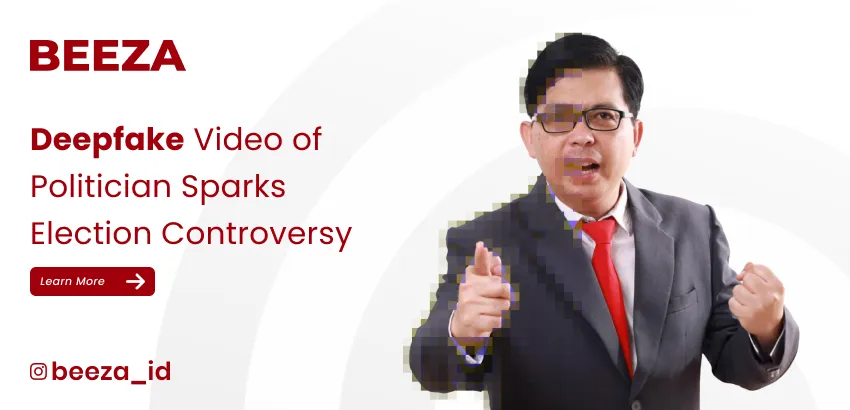
A viral deepfake targeting a high-profile politician raises alarm over the misuse of AI in shaping public opinion and scamming corporations. Real-time visual and voice authentication is now a digital necessity.
Deepfakes Can Ruin Reputations — Is Your Business Prepared?
A manipulated video of a prominent political figure recently went viral, causing chaos ahead of a national election. While the video was quickly confirmed to be fake, the damage to public trust had already been done — a stark warning about the growing power of deepfake technology and its implications for businesses worldwide.
Deepfakes: From Political Chaos to Corporate Risk
Once considered a novelty or the product of experimental AI labs, deepfakes have now evolved into a potent threat. Today, they’re being used to impersonate public figures, manipulate audiences, and — more alarmingly — defraud companies of hundreds of thousands of dollars.
The World Economic Forum has listed AI misuse, including deepfakes, as one of the top technology risks this decade. A study by Gartner estimates that by 2025, 90% of online video content will be synthetically generated or altered — with many instances being indistinguishable from reality.
The recent case in Indonesia featured a deepfake of a politician delivering controversial remarks. The video, though completely fabricated, was realistic enough to convince thousands before experts conducted digital forensic analysis to expose the truth.
Business at Risk: Not Just a Political Problem
While the political world has already felt the disruptive effects of deepfakes, the corporate world is next in line. In 2019, a UK-based energy firm reported a loss of over $240,000 after an executive was duped by a deepfake voice message mimicking the CEO’s tone and speech patterns, instructing a wire transfer.
These attacks are getting more sophisticated. In the business landscape, a falsified video of a company executive could be used to trick employees into executing unauthorized transactions, leaking confidential data, or approving critical documents.
In Southeast Asia, particularly in fast-growing digital economies like Indonesia, the risk is no longer theoretical — it’s happening in real time.
The Technology Behind Deepfakes
Modern deepfakes are powered by Generative Adversarial Networks (GANs) — a class of AI algorithms capable of producing highly convincing fake videos and audio. As the technology improves, manual or visual inspection alone is no longer effective.
Researchers at MIT found that over 60% of adults failed to distinguish deepfakes from real footage during controlled testing. This means that even experienced professionals can be deceived without advanced detection tools.
The Solution: Intelligent Authentication Systems
To combat the growing threat of deepfakes, companies need to upgrade their identity verification processes. Traditional methods like passwords or even 2FA SMS are no longer sufficient to stop AI-generated fraud.
Here are three modern solutions that forward-looking organizations are already adopting:
1. AI-Powered Liveness Detection
This system ensures that the user is physically present and alive during verification. It analyzes micro facial movements, eye blinks, and real-time responses — making it nearly impossible for a pre-recorded or deepfake video to pass.
2. Real-Time Face Match & Voice Biometrics
Biometric technologies compare a user’s facial features and voice patterns against a verified database. This ensures that only authorized individuals can access systems or approve transactions.
3. Verified Digital Signatures
Every instruction, approval, or sensitive document should be protected by certified digital signatures — encrypted, timestamped, and unforgeable.
Case Study: Beeza’s Multi-Layered Protection
One of the leading digital identity providers, Beeza, offers an integrated solution that includes face matching, liveness detection, voice recognition, and AI-based digital signatures.
Beeza’s platform is trusted by businesses and institutions looking to secure their onboarding, approval workflows, and internal verifications. With easy API integration and enterprise-level security, Beeza helps organizations stay ahead of potential deepfake-related fraud.
Why This Matters Now
“You can no longer rely on gut feeling or manual verification. Deepfakes can make anyone appear to say or do anything. Only technology can fight technology,”
– said Rizal Arif, cybersecurity expert at Indonesia Cyber Watch.
In the digital economy, trust is currency. And that trust must be protected with systems that are capable of recognizing and blocking AI-manipulated attacks in real time.
Final Thought: Don’t Wait to Be the Next Victim
Deepfakes are not a future problem. They are already influencing elections, scamming businesses, and damaging reputations. Your company doesn’t need to be next on the list.
With Beeza, you can secure your workflows, protect your identity, and ensure that every digital interaction is authenticated and traceable.Take control of your business security. Stop deepfakes before they start.
Learn more and request a demo at beeza.id