Proof of Provenance: The Solution for Authenticity Verification in the Digital Age
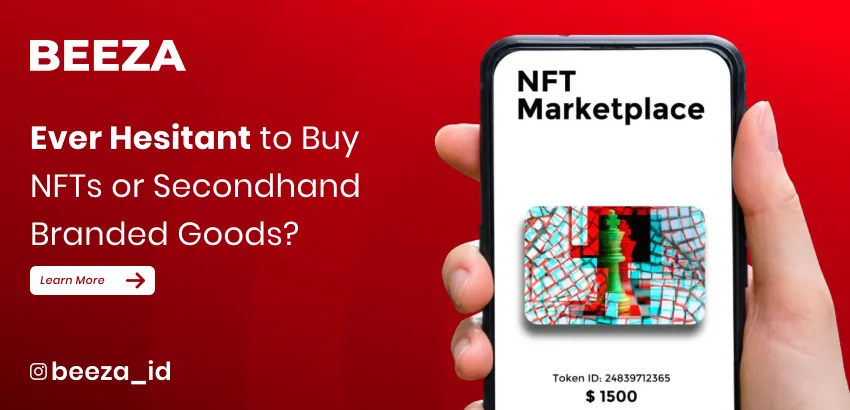
Have you ever hesitated when buying an NFT, a trending digital painting, or even secondhand branded items at a high price? Although claimed authentic, proof of authenticity is often hard to verify. In today’s digital era, proving an asset’s authenticity has become increasingly complex—especially when these assets can be easily duplicated and widely distributed. This is where Proof of Provenance technology comes in as a smart solution that addresses these concerns. By utilizing blockchain technology, Proof of Provenance ensures that every trace of an asset’s origin and ownership history is recorded transparently, permanently, and immutably.
What Is Proof of Provenance and How Does It Work?
Proof of Provenance (PoP) is a technology that records and verifies the history or origin of both digital and physical assets using blockchain. With PoP, every detail about the asset such as its original creator, creation date, and complete list of past owners is recorded in a decentralized and cryptographically secured system.
Technically, blockchain acts as a digital ledger that records every transaction in a distributed and encrypted manner. Each change of ownership or asset status is saved in blocks linked to one another and validated by multiple nodes within the network. This mechanism guarantees that data cannot be altered unilaterally or manipulated without the consensus of the majority of the network.
With Proof of Provenance, both buyers and sellers gain access to a full audit trail proving the authenticity and ownership journey of the asset. This removes the risk of purchasing fake, duplicate, or suspiciously sourced assets.
Data and Facts Supporting the Need for Proof of Provenance
How urgent is the use of Proof of Provenance in real life? According to a 2025 report from Indodax Academy, cases of fraud and duplication of digital assets, especially NFTs and digital collectibles, have dramatically increased. Without a transparent verification system, buyers are highly vulnerable to counterfeit assets.
Moreover, Provenance Proof AG, a Swiss laboratory, has successfully implemented blockchain to track the value chain of luxury gemstones. Their recorded data spans millions of entries, covering the origin from mines to the final owners, enabling consumers to verify gemstone authenticity as well as ethical production.
Various industry studies also reveal that with the presence of Proof of Provenance, the risk of product and document forgery can be reduced by up to 70%. Not only digital art and luxury goods industries, but sectors like legal documents and educational certificates are beginning to adopt this technology to ensure data authenticity.
Benefits of Proof of Provenance for Digital and Luxury Goods Industries
The use of Proof of Provenance offers several significant advantages, including:
- Full Transparency and Accountability: The entire journey of the asset can be traced from its creation to the last owner with records that cannot be forged.
- High Data Security: Data stored on the blockchain is immutable—not editable or deletable without the network’s consensus—ensuring integrity and validity.
- Reduced Risk of Fraud: Clear ownership evidence protects buyers from purchasing fake or counterfeit items.
- Increased Market Value and Consumer Trust: Assets with blockchain-backed authenticity evidence have higher resale value and greater trustworthiness.
- Global Ease of Access and Verification: Anyone, anywhere can instantly verify asset authenticity without complicated procedures or middlemen.
Implementation of Proof of Provenance Across Industries
Proof of Provenance is not a new concept, but its growing application significantly impacts various sectors:
- Digital Art and NFTs: Unique and non-fungible digital artworks can have their history recorded on blockchain. Artists, collectors, and buyers can trace ownership and confirm the originality of their pieces.
- Luxury Goods Supply Chain: In the luxury goods sector, especially jewelry and gemstones, PoP guarantees authenticity while ensuring ethical production. For example, Gübelin Gem Lab’s Provenance Proof blockchain tracks gemstones from mine to end-user.
- Legal Documents and Certificates: PoP assists in validating official documents such as educational certificates, legal deeds, licenses, and even medical records that require extra data protection.
- Collectibles and Secondhand Branded Items: The growing market of secondhand branded goods benefits greatly from PoP to assure buyers of item authenticity and clear ownership history.
Conclusion
Blockchain-based Proof of Provenance offers a new paradigm for maintaining the integrity and authenticity of both digital and physical assets. With complete transparency, high data security, and global ease of access, PoP is a crucial tool in an era where asset counterfeiting is increasingly sophisticated and widespread. This system not only protects your valuable assets but also enhances their market value and trust.
Protect your digital collections and valuable items with blockchain-based Proof of Provenance technology. Start verifying and securing your asset authenticity with a trusted and efficient solution from Beeza.
Visit beeza.id now and take a smart step toward safeguarding your digital and physical assets.