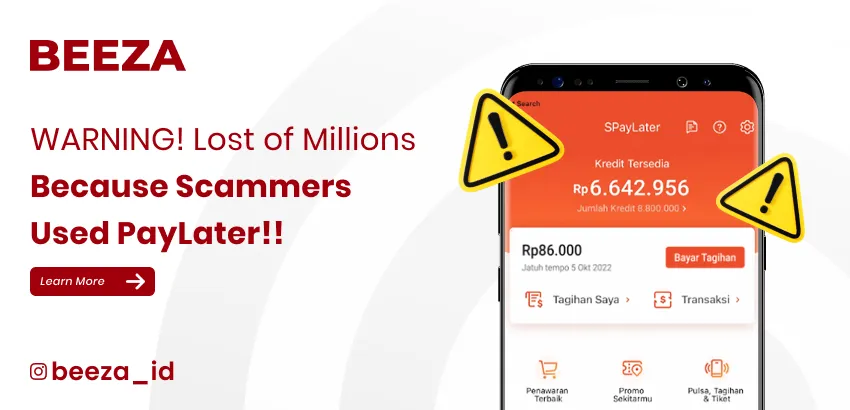
Scams no longer come only in the form of suspicious links or fake SMS messages. Today, fraudsters are taking a more subtle route: impersonating Shopee’s official representatives, instilling panic in users, and exploiting the Paylater SPinjam feature to trap unsuspecting victims. This alarming scheme highlights the urgent need for vigilance and stronger digital identity protection in an era where cyberattacks are becoming increasingly complex.
A New Twist on Digital Scams
In recent weeks, reports of scams involving Shopee’s Paylater SPinjam loan service have circulated widely across Indonesian social media and consumer forums. The method is deceptively simple: fraudsters call victims while claiming to be Shopee representatives. They then tell the victim there has been a suspicious login attempt on their account, creating a sense of urgency and fear.
To “secure” the account, scammers instruct the victim to access Paylater in SPinjam, Shopee’s loan feature. Under pressure and confusion, victims unknowingly apply for a loan, believing they are safeguarding their accounts. Once the loan funds are disbursed, scammers convince victims to transfer the money back—supposedly to Shopee for verification. In reality, this is the moment fraudsters hijack the account and siphon off the funds.
How the Fraud Works: Step by Step
- Impersonation Call: Victim receives a phone call from someone pretending to be a Shopee staff member.
- Panic Trigger: Caller warns about “suspicious login activity” to scare the victim.
- False Instruction: Victim is told to open SPinjam to “secure” their account.
- Unwitting Loan Application: Victim applies for a loan, believing it’s part of the security process.
- Funds Misuse: Scammer instructs the victim to transfer the loan money back to Shopee, which is a ruse.
- Account Hijack: During the process, the scammer gains access to the victim’s account, taking control of both the account and the funds.
This scam demonstrates a worrying shift in tactics: fraudsters no longer rely solely on phishing links but directly exploit digital loan features to defraud users.
The Bigger Picture: Digital Finance and New Attack Vectors
Digital lending platforms have grown rapidly in Southeast Asia, especially in Indonesia. Services like Paylater SPinjam offer convenience, fast disbursement, and integration with popular e-commerce platforms. According to Bank Indonesia, the digital loan market has seen double-digit growth year-on-year, with over 45 million registered users nationwide.
But with growth comes risk. Fraudsters are increasingly targeting the very features that make these platforms attractive: speed, ease of use, and seamless integration. Unlike traditional scams, which may involve malware or suspicious links, these new schemes manipulate the victim into initiating the financial transaction themselves—making it harder to detect and trace.
Why Victims Fall for It
- Authority Bias: Calls appear to come from “official” Shopee representatives, making them seem credible.
- Panic and Urgency: By warning of suspicious logins, fraudsters trigger fear and haste, reducing rational thinking.
- Lack of Awareness: Many users are unfamiliar with SPinjam’s mechanics and believe following instructions will protect their account.
- Social Engineering Mastery: Scammers are skilled at manipulating human behavior, exploiting trust and confusion in stressful moments.
Shopee’s Official Statement
Shopee Indonesia has repeatedly emphasized that the company never calls users to request passwords, OTP codes, or to instruct customers to apply for loans. Any such attempt is a clear red flag of fraud. Users are urged to immediately end suspicious calls and report them through Shopee’s official channels.
Protecting Yourself Against Digital Loan Scams
Experts recommend several practical steps to avoid falling victim to schemes like this:
- Never trust unsolicited calls claiming to be from banks, e-commerce platforms, or loan providers.
- Do not share personal data such as OTP codes, PINs, or login credentials.
- Verify with the official app: Always double-check any suspicious notification directly in the Shopee app.
- Enable two-factor authentication (2FA) for stronger account security.
- Stay updated: Regularly read official announcements from Shopee and financial regulators.
Beeza: Strengthening Digital Identity Protection
The rise of scams exploiting Paylater SPinjam underlines one crucial point: digital identity protection is no longer optional—it is essential.
This is where Beeza comes in. Beeza provides secure, AI-powered digital verification solutions such as:
- e-KYC (electronic Know Your Customer)
- Face Match and Liveness Detection
- Digital Signatures
- Secure Document Authentication
By integrating Beeza’s solutions, financial platforms and e-commerce players can significantly reduce fraud risks. Beeza ensures that only legitimate users gain access, while reducing the chance of social engineering attacks.
For individuals, Beeza offers peace of mind—knowing that their digital identity is safeguarded even in the face of increasingly sophisticated scams.
Conclusion
The Paylater in SPinjam scam targeting Shopee users is a wake-up call about the evolving landscape of cybercrime. Fraudsters are no longer relying solely on phishing or malware but are exploiting legitimate features in new, manipulative ways.
As digital finance continues to grow, protecting user identities must remain a top priority. With tools like Beeza, companies and users alike can build stronger defenses against fraud.👉 Stay vigilant. Stay informed. And safeguard your digital identity with Beeza.