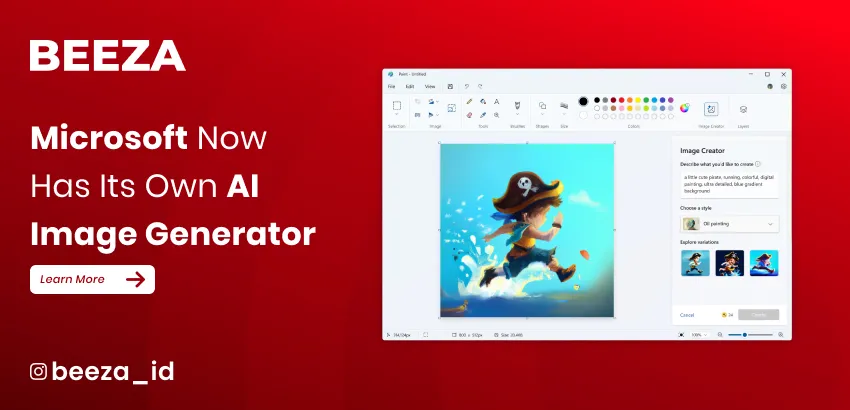
Technology giant Microsoft has officially introduced its own AI-powered image generator, now integrated into Bing and Microsoft Designer—marking a significant move in the increasingly competitive generative AI landscape.
Microsoft Expands Its Ambitions in Generative AI
Microsoft is once again capturing global attention by launching an AI-based image generation feature directly embedded within Bing and Microsoft Designer. This new capability allows users to create realistic images simply by entering text prompts—an innovation that directly competes with platforms such as Midjourney, DALL·E, and Stable Diffusion.
This move is more than a feature expansion; it represents a broader strategic effort to strengthen Microsoft’s generative AI ecosystem. Following its substantial investment in OpenAI and the integration of Copilot across its product suite, Microsoft now appears determined to develop and control its own in-house visual AI technology.
“AI is no longer just about text and data—it’s also about visual expression,” said a Microsoft spokesperson during the official launch. “We want to empower users to create, imagine, and work efficiently without limits.”
Fierce Competition in the Creative AI Space
The generative AI market has become a major battleground for global tech leaders. OpenAI with DALL·E 3, Google with Imagen, and Meta with Emu are all racing to deliver highly realistic visuals with greater efficiency and contextual understanding.
With Microsoft entering this arena, users gain a new alternative that is deeply integrated into everyday productivity tools—from Word and PowerPoint to Teams—making AI-powered creativity more accessible within existing workflows.
According to a Statista report (2025), the global generative AI market is projected to exceed USD 60 billion by 2030, up sharply from USD 13 billion in 2023. Visual content creation is among the fastest-growing segments, driven by strong adoption in design, marketing, and education.
Convenience and Challenges Behind the New Technology
Microsoft’s image generator is said to excel in understanding nuanced prompts and producing images with complex details—such as realistic lighting, depth, and artistic composition.
However, alongside these capabilities come critical concerns: image authenticity, copyright ownership, and the potential misuse of AI-generated visuals.
Generative AI presents vast opportunities for advertising, education, and creative industries, but it also introduces risks, including deepfakes, misinformation, and identity manipulation. As a result, digital security and online identity authenticity are becoming increasingly vital issues.
Content Authenticity Becomes a Major Challenge in the AI Era
When anyone can create lifelike images with just a few words, the line between reality and fabrication grows increasingly blurred.
A study by Cybersecurity Ventures reports that financial losses caused by AI-driven digital fraud and manipulation have risen by up to 80% since 2023. This trend underscores the urgent need for verification solutions that can ensure the integrity of digital identities and content.
Organizations across industries—design, finance, and government—are now required to adopt robust digital verification systems to maintain trust among the public and business partners.
Preserving Trust Amid the AI Explosion
Innovations such as Microsoft’s AI image generator demonstrate the immense potential of AI to accelerate creativity. At the same time, rapid digitalization demands additional security layers to prevent misuse.
Digital trust has become one of the most valuable assets in the modern economy. Organizations that can guarantee data authenticity, secure identities, and verified digital documents are far more likely to earn and retain public trust—especially in an era where “real” and “synthetic” content are increasingly difficult to distinguish.
Through the implementation of e-KYC, digital signatures, facial authentication, and document security technologies, companies can protect their reputation and credibility during this massive AI-driven transformation.
AI Accelerates Creativity, but Digital Trust Defines the Future
AI tools like Microsoft’s image generator undoubtedly make creative processes faster and more efficient. However, the responsibility for maintaining digital security still lies with the people and systems behind the technology.
Innovation without trust only creates new risks.
Therefore, building a secure, reliable, and efficient digital ecosystem is essential to navigating the generative AI era successfully.
Conclusion: Innovation and Security Must Go Hand in Hand
The launch of Microsoft’s AI image generator marks a new era in the digital world—one where creativity can happen in seconds, but trust becomes the most valuable currency.
Every organization, large or small, must recognize that innovation must be balanced with strong digital security. By adopting technologies that verify identities and documents quickly and securely, businesses can grow efficiently without sacrificing user and partner trust.
In a fast-moving digital environment, security and authenticity are no longer optional—they are necessities.
Start building digital trust across every business process, from identity verification to digital signatures, to ensure innovation moves forward safely and responsibly.Learn more at beeza.id about how digital verification can help your business grow with greater trust.