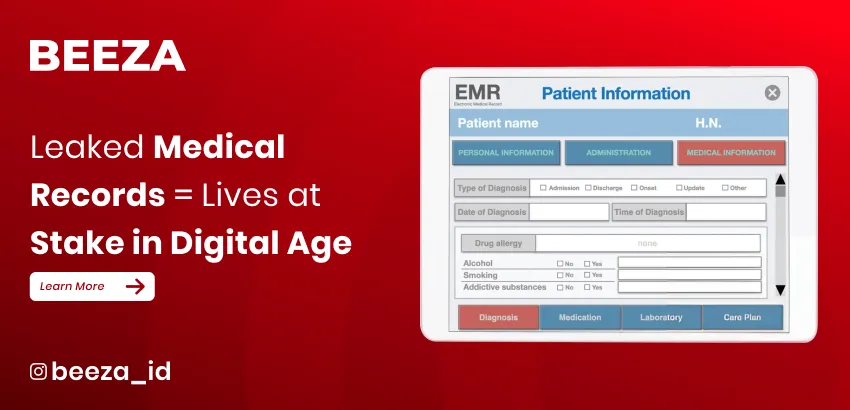
A massive cyberattack has compromised the medical records of millions of patients, raising urgent concerns about digital security in healthcare. Beyond the breach itself lies a broader threat: privacy violations, identity theft, and fraudulent insurance claims stemming from leaked medical data.
Medical Records Breached — A Serious Privacy Crisis
On July 10, 2025, HealthITSecurity reported a large-scale data breach involving one of the largest healthcare providers in the United States. The attackers infiltrated the hospital’s internal systems, accessing millions of sensitive patient records. The leaked data includes not only names and birth dates but also diagnostic results, treatment histories, lab records, and health insurance policy details.
This incident underscores a growing reality: even well-established institutions are not immune to cyberattacks. The consequences are far-reaching, threatening patients’ personal privacy, exposing them to financial fraud, and shaking public trust in the healthcare system.
Why Medical Data Is a Prime Target for Cybercriminals
Medical data is among the most valuable and sensitive types of personal information. Unlike a credit card number that can be canceled and reissued, medical records are permanent and cannot be changed. That makes them highly attractive on the dark web, where stolen health records can fetch prices far higher than financial credentials.
Criminals use these records to file fraudulent insurance claims, impersonate patients, forge prescriptions, or even blackmail individuals based on their medical conditions. According to the Ponemon Institute, the black-market value of medical records can be up to ten times that of credit card data, making the healthcare sector a consistent target.
The Healthcare Sector Remains Alarmingly Vulnerable
Despite handling life-critical data daily, many healthcare providers still lack robust digital security systems. The IBM X-Force Threat Intelligence Index 2025 ranks the healthcare sector among the top three most targeted industries for ransomware and data theft, following finance and government.
Healthcare information systems are often complex, with numerous third-party integrations such as labs, insurers, billing platforms, and referral networks. This complexity is not always matched by adequate security measures. Weak access control, outdated software, unencrypted data transmission, and limited staff training all contribute to the sector’s vulnerability.
Furthermore, many healthcare facilities still lack role-based access policies, making it easier for unauthorized staff to access sensitive information. Without real-time monitoring or audit trails, attacks can remain undetected for weeks or even months.
Data Security Requires a Holistic Strategy
To prevent such breaches, the healthcare industry must adopt a multi-layered approach to data protection—far beyond basic antivirus software or firewalls.
First, all medical data should be protected with end-to-end encryption, both in transit and at rest. This ensures that even if data is intercepted or stolen, it remains unreadable without proper decryption keys.
Second, the use of certified digital signatures must become standard practice for all critical medical documents—test results, prescriptions, referrals, and patient records. Digital signatures provide document authenticity and protect against tampering.
Third, access to health data must be strictly regulated using role-based access control (RBAC). Each user should only access the information necessary for their responsibilities. This minimizes the risk of insider threats and accidental data leaks.
Fourth, healthcare IT systems should implement automatic audit logs and real-time activity monitoring to detect unauthorized access attempts and ensure forensic traceability during a breach.
Patient Trust Depends on Digital Responsibility
Healthcare is built on trust. Patients expect their information to be treated with the utmost confidentiality and professionalism. A data breach doesn’t just result in regulatory penalties—it severely damages an institution’s reputation, leading to a loss of patient confidence and even legal consequences.
As hospitals and clinics embrace digital transformation, they must not sacrifice privacy and security. Every app, system integration, and digital workflow should be evaluated through the lens of data protection. Healthcare providers have a duty to ensure that digital convenience does not become a digital liability.
How Beeza Helps Secure Medical Information
Beeza offers trusted digital security solutions tailored for healthcare providers seeking to strengthen their verification and data protection processes. With Beeza, hospitals and clinics can:
- Implement certified digital signatures to secure lab results, diagnoses, and prescriptions
- Use biometric face matching and liveness detection to authenticate patients and medical staff
- Enforce role-based access control to ensure only authorized personnel can access sensitive data
- Maintain comprehensive audit logs for transparency and compliance tracking
- Protect digital workflows with AI-based verification and data validation
Beeza helps healthcare organizations meet regulatory standards while boosting operational integrity and building trust with patients.
Conclusion: Data Security Is Healthcare Security
The exposure of medical records in this latest breach serves as a stark reminder that digital security is not optional—it is foundational. In today’s interconnected world, protecting patient data is as critical as delivering care itself.
Healthcare providers must act urgently, not reactively. Proactive implementation of advanced verification, encryption, and access control technologies is no longer a luxury, but a necessity to protect patients and safeguard institutional credibility.Secure your healthcare data with advanced digital verification.
Explore how Beeza can help at https://beeza.id