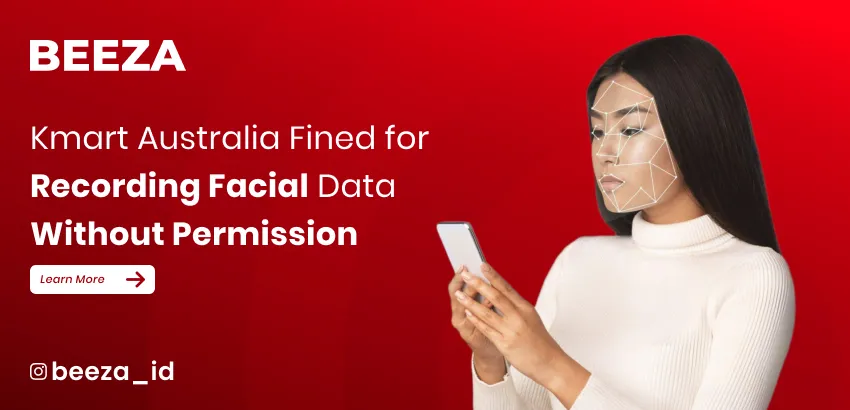
As technology advances, the line between efficiency and privacy violation becomes increasingly blurred. The recent case of Kmart Australia proves this — the retail giant was sanctioned by the country’s privacy regulator for collecting facial data from customers without consent.
What began as an effort to improve store security has now turned into a major trust crisis and a costly penalty.
This isn’t just a local issue in Australia; it’s a global reminder for every digital business: without transparency and permission, innovation can quickly turn into a violation.
Now is the time for companies to rethink how they collect, manage, and protect customer data ethically and responsibly.
The Case: When Security Cameras Cross the Line
Australia’s Office of the Australian Information Commissioner (OAIC) ruled that Kmart violated national privacy laws by collecting and storing shoppers’ facial data without explicit consent.
The company had deployed facial recognition systems across more than 28 stores, citing “safety and loss prevention” as justification.
However, investigations revealed that customers were never clearly informed that their faces were being recorded and stored in an internal database.
There were no signs, notifications, or opt-out options. The OAIC deemed this a serious breach of Australia’s privacy principles.
Kmart has since been ordered to delete all collected biometric data, conduct internal audits, and pay a regulatory penalty. But the true cost lies not just in fines — it’s in the loss of public trust.
Key Lesson for Businesses: Transparency Is Not Optional
This incident underscores a growing concern in the age of digital transformation — biometric data collection without consent is not just unethical; it’s illegal.
Many companies today rely on customer data for personalization, analytics, and security, yet forget that data comes with moral responsibility.
Globally, facial recognition and biometric data are now under intense scrutiny.
The EU’s AI Act and GDPR already impose strict requirements on how companies process biometric information, aiming to ensure that technology serves people — not exploits them.
Privacy Is Not a Barrier — It’s the Foundation of Digital Trust
In the modern digital economy, trust is the new currency.
Customers are willing to share information — but only when they understand how it’s used and feel safe doing so.
When that trust is broken, the damage extends far beyond fines and lawsuits.
Data protection isn’t just a technical challenge; it’s a moral and reputational one.
A single privacy breach can undo years of brand-building. That’s why companies must put privacy at the heart of their digital strategy, not as an afterthought.
The Indonesian Context: Data Laws Are Getting Stricter
In Indonesia, data privacy is also taking center stage.
With the implementation of the Personal Data Protection Law (UU PDP), organizations are now required to ensure full transparency, explicit consent, and secure handling of personal data.
Cases like Kmart’s highlight exactly what can go wrong when consent is ignored.
Indonesian businesses — from fintechs to government agencies — are increasingly aware of this, but true compliance means not only technical security, but ethical and educational readiness within organizations.
Building Trust Through Transparent Digital Verification
Every digital interaction — from onboarding and identity verification to electronic signing — depends on one thing: trust.
That trust can only exist when the processes behind it are secure, compliant, and transparent.
This is where digital verification platforms play a critical role.
Solutions such as e-KYC, Face Match, Liveness Detection, and Digital Signatures can help businesses verify identities safely, prevent fraud, and maintain user confidence.
Beeza, for instance, empowers companies to integrate secure, transparent, and regulation-ready verification systems without friction.
It’s not just about compliance — it’s about building long-term trust with users and partners in the digital ecosystem.
Conclusion: Ethics Is the New Competitive Advantage
The Kmart Australia case is a stark reminder that technology without ethics is risk, not innovation.
In the era of digital trust, businesses that prioritize privacy, transparency, and security will stand out — and survive.
Data protection is no longer just an IT issue; it’s a core business strategy.Want to build trust without risking compliance issues?
Explore secure, transparent, and easy-to-integrate verification solutions at Beeza.id — because true innovation starts with digital trust.