Digital transformation is rapidly reshaping various industries, including logistics and port operations. As the demand for efficiency and transparency increases, traditional manual systems are being replaced by more advanced digital solutions.
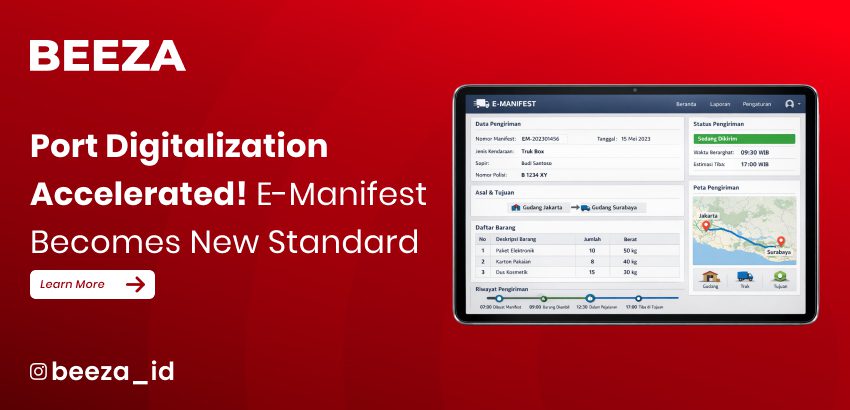
One of the key innovations driving this shift is the implementation of E-Manifest, a digital system that enables electronic management of shipment data. Its adoption not only accelerates operational processes but also improves data accuracy and security in the logistics sector.
So, how has E-Manifest become the new standard in port digitalization?
What is E-Manifest?
E-Manifest is a digital system used to record, manage, and report shipment data electronically.
Through this system, all information related to cargo—such as type, quantity, origin, and destination—is recorded in real-time and integrated into a single platform.
E-Manifest replaces manual, paper-based processes that are often time-consuming and prone to errors.
Why is Port Digitalization Important?
Ports play a critical role in the logistics supply chain. Delays or errors at ports can significantly impact the entire distribution process.
Digitalization helps to:
- Reduce administrative processing time
- Minimize human errors
- Improve data transparency
- Accelerate cargo flow
With digital systems like E-Manifest, port operations become more efficient and well-structured.
Key Benefits of E-Manifest
The implementation of E-Manifest provides significant advantages for logistics stakeholders.
1. Faster Processes
Data can be entered and accessed in real-time, speeding up verification and cargo handling processes.
2. Higher Data Accuracy
Digital systems reduce the risk of errors commonly found in manual documentation.
3. Transparency and Monitoring
All stakeholders can easily track shipment status with better visibility.
4. System Integration
E-Manifest can be integrated with other systems such as customs and port authorities, creating a unified digital ecosystem.
Impact on the Logistics Industry
The adoption of E-Manifest brings substantial positive impacts to the logistics industry.
These include:
- Reduced operational costs
- Faster cargo distribution
- Improved document management efficiency
- Increased customer trust
With more modern systems in place, logistics companies can enhance their competitiveness in the global market.
Challenges in Implementation
Despite its benefits, implementing E-Manifest comes with certain challenges.
Some of the key challenges include:
- Readiness of digital infrastructure
- Workforce adaptation
- Integration with legacy systems
- Regulatory compliance
However, with the right strategy, these challenges can be effectively managed and even turned into growth opportunities.
The Future of Port Digitalization
Looking ahead, port digitalization will continue to evolve with technologies such as AI, IoT, and big data.
E-Manifest will become part of a broader digital ecosystem, enabling faster, safer, and more transparent logistics processes.
This transformation will not only improve efficiency but also elevate overall service quality.
Conclusion
E-Manifest has become a key pillar in port digitalization.
With its ability to improve efficiency, accuracy, and transparency, it is transforming how logistics operations are managed.
Digital transformation is no longer optional—it is essential for staying competitive in an increasingly complex industry.
Accelerate Your Digital Transformation Today
In today’s digital era, speed and efficiency are critical for business success, especially in logistics and transportation.
Adopting digital solutions such as E-Manifest, automated data verification, and integrated systems can significantly enhance operational performance.
Contact Beeza to explore the right digital solutions for accelerating your business transformation.
Discover innovative technologies to support a more efficient and competitive future.